









October 18—World Menopause Awareness Day
Maybe you have started to notice changes in your body: your cycle, your sleep, your mood, or your weight. Or maybe you feel just the same, but you would like to be prepared for what lies ahead.
Either way, this guide is for you. It explains what happens to your hormones after 40, which symptoms to look out for, which tests are worth doing, and what you can do to feel your best through midlife and beyond.
Parkway Services:What is perimenopause?
Why this matters: cycles with high oestrogen and low progesterone can bring heavy periods, breast tenderness, and worse PMS. Cycles with low oestrogen can bring hot flushes, poor sleep, and low mood. Many women experience both at different times.
Even 10 minutes a day of a calming practice, such as breathing exercises, yoga, or time outdoors, can help.
Cognitive behavioural therapy (CBT) has good evidence for hot flushes, sleep, and low mood in menopause.

Perimenopause is the hormonal transition that leads up to your final period. It usually starts in your 40s, sometimes in your late 30s, and lasts on average 4 to 8 years.
It is a normal life stage, not a disease. But the symptoms can be real, disruptive, and very treatable.
The transition happens in stages:
Reproductive years. Regular cycles and predictable hormone patterns.
Early perimenopause. Cycles are still regular but start to vary by 7 days or more. PMS, sleep, mood, or breast symptoms may change.
Late perimenopause. Periods are skipped, with gaps of 60 days or more. Hot flushes, night sweats, and sleep problems become more common.
Menopause. A single point in time: 12 months after your final period. The average age is around 51.
Postmenopause. The years that follow. Some symptoms settle, while long-term health of bones, heart, and brain becomes the focus.
Periods stopping before age 40 is called premature ovarian insufficiency and always needs medical assessment.
Could this be perimenopause?
If you are over 40, still having periods, and tick several of the boxes below, perimenopause is a likely explanation. Bring this list to your doctor.
Cycle changes
My cycle is shorter, longer, or less predictable than it used to be
My periods are heavier, longer, or include clots or flooding
My PMS has become stronger or lasts longer
Body and sleep
I have hot flushes or night sweats, sometimes only before my period
I wake in the night and struggle to fall back asleep
My breasts are more tender or swollen than before
I have new or worse headaches or migraines
I have joint aches or stiffness without an obvious cause
I am gaining weight around my middle without changing my diet or exercise
Mood and mind
I feel more anxious, irritable, or low than usual
I have trouble concentrating or remembering things ("brain fog")
My interest in sex has dropped
Intimate and urinary health
I have vaginal dryness or discomfort during sex
I need to pass urine more often, or have more urinary infections
Many of these symptoms can also come from thyroid problems, anaemia, depression, or medications. A checklist supports a conversation with your doctor; it does not replace a diagnosis.
What happens to your hormones?
In perimenopause, hormones do not simply fall in a straight line. They swing up and down, often from one cycle to the next. That is why symptoms come and go.
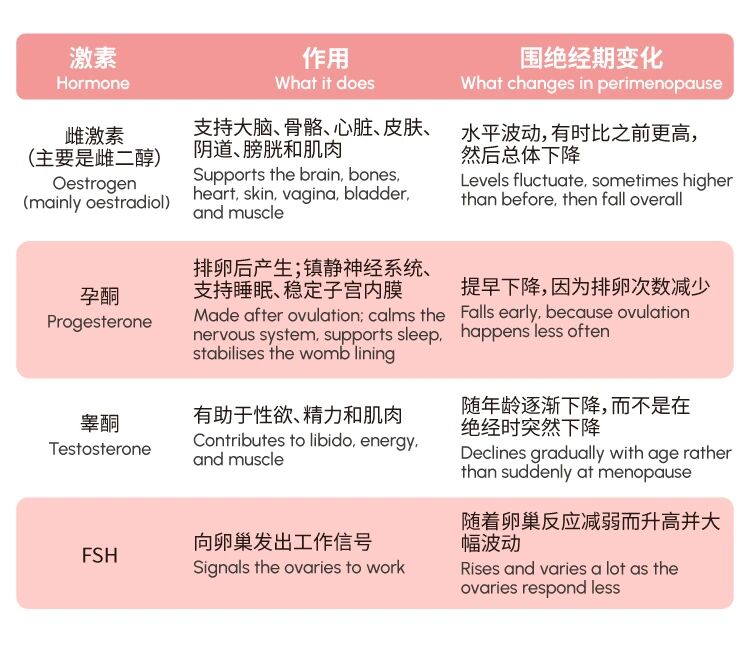
Why this matters: cycles with high oestrogen and low progesterone can bring heavy periods, breast tenderness, and worse PMS. Cycles with low oestrogen can bring hot flushes, poor sleep, and low mood. Many women experience both at different times.
Why weight and body shape change?
Most women gain some weight in midlife, but the bigger change is where fat is stored. As oestrogen falls, fat shifts from the hips and thighs to the abdomen, including visceral fat around the organs.
Cycle changesMuscle loss. Women lose muscle faster from midlife, and muscle becomes less responsive to protein. Less muscle means lower daily energy use.
Insulin resistance. Lower oestrogen and more abdominal fat make blood sugar harder to control.
Poor sleep. Night sweats and waking raise appetite hormones and cravings the next day.
Stress and life load. Work, children, and ageing parents often peak at the same time.
Lower activity. Fatigue and joint pain can quietly reduce daily movement.
The good news: this is not inevitable. Strength training, enough protein, better sleep, and, where appropriate, hormone therapy or weight-management medication can change the trajectory. The aim is not just a lower number on the scale but keeping muscle, protecting bones, and lowering heart and diabetes risk.
Which blood tests are useful?
For women over 45 with typical symptoms, perimenopause is diagnosed from symptoms and cycle changes, not a blood test. Hormone levels swing so much from day to day that a single result can be normal one week and abnormal the next.
FSH may be useful in women under 45, when symptoms are unusual, or when periods stop before 40.
Blood tests are still valuable to rule out other causes and to check your long-term health:
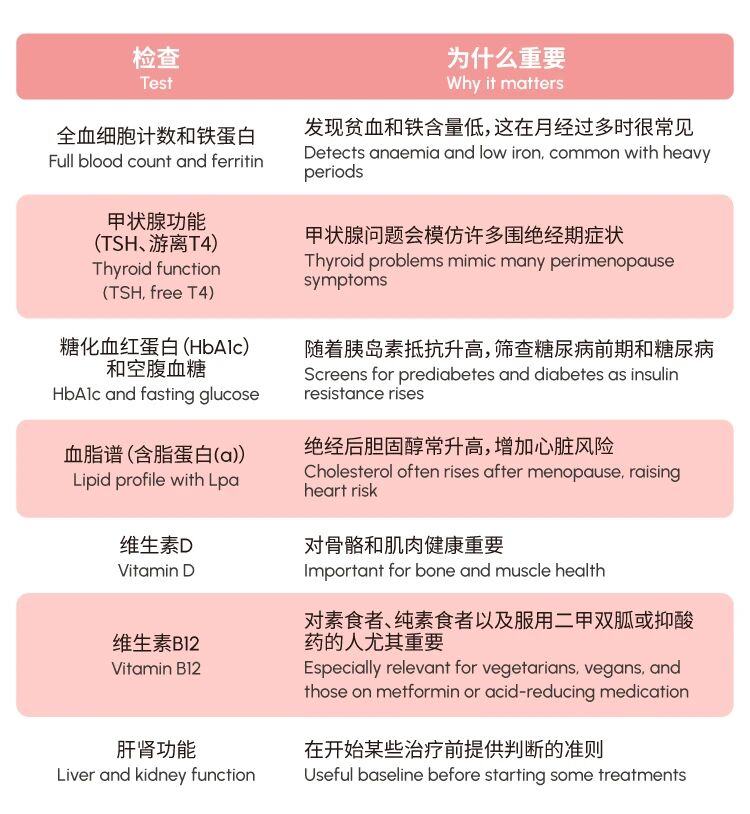
Your doctor may add other tests based on your history, such as a pelvic ultrasound for very heavy bleeding or a bone density scan if you have risk factors for osteoporosis.
The foundations
Lifestyle cannot replace hormones, but it strongly shapes how you feel through the transition and your health afterwards.
Nutrition
Aim for about 1.0 to 1.2 g of protein per kg of body weight daily, spread as 25 to 30 g per meal.
Build meals around vegetables, legumes, whole grains, fish, and healthy fats, in a Mediterranean-style pattern.
Include calcium-rich foods daily for bone health: dairy, fortified soy milk, tofu set with calcium, sardines.
Reduce ultra-processed foods and sugary drinks, which worsen insulin resistance.
Strength training
Two to three sessions a week of resistance exercise protect muscle and bone better than cardio alone.
Add regular walking or other aerobic activity for heart health and mood.
Sleep
If night sweats or waking disrupt sleep most nights, speak to your doctor: this is treatable.
Keep a regular sleep and wake time, and a cool, dark bedroom.
Stress
Even 10 minutes a day of a calming practice, such as breathing exercises, yoga, or time outdoors, can help.
Cognitive behavioural therapy (CBT) has good evidence for hot flushes, sleep, and low mood in menopause.
Alcohol and smoking
Alcohol often worsens hot flushes, sleep, and weight. Many women notice they tolerate it less in midlife.
Stopping smoking reduces hot flushes and protects bones and heart.
When to see a doctor?
Book an appointment if symptoms affect your sleep, work, relationships, or quality of life. You do not need to wait until periods stop.
See a doctor promptly if you have:
Bleeding after sex or between periods
Very heavy bleeding, flooding, or symptoms of anaemia such as breathlessness or dizziness
Any bleeding after 12 months without a period
Periods stopping before age 40
Persistent low mood, anxiety, or thoughts of self-harm
Your next steps
Complete the symptom checklist above
Track your cycle and symptoms for 2 to 3 months
Note your family history of heart disease, diabetes, osteoporosis, and breast cancer
Book a consultation to discuss your symptoms, tests, and treatment options