This site uses cookies. By continuing to browse the site you are agreeing to our use of cookies. For more details about cookies and how to manage them see our Privacy Policy.

Advanced Cellular Therapy Services

At Parkway Shanghai Hospital, we are committed to providing comprehensive cancer and haematology care through a multidisciplinary, patient-centred approach. As part of our ongoing efforts to expand access to innovative treatment options, advanced cellular therapy is now available for eligible patients with relapsed or refractory multiple myeloma.


Parkway Shanghai Hospital is currently certified to provide BCMA-targeted CAR-T cell therapy (B-cell maturation antigen-targeted CAR-T cell therapy) for eligible patients with relapsed or refractory multiple myeloma who meet the approved treatment indications and are assessed as suitable by our specialist team. CAR-T cell therapy harnesses the body's own immune cells to recognise and target cancer cells, offering an innovative treatment option for selected patients whose disease has progressed despite prior therapies.


Our haematology and oncology specialists work closely with patients throughout the treatment journey, from clinical assessment and treatment planning to post-treatment monitoring and follow-up care. Each patient undergoes a comprehensive evaluation to determine treatment suitability and identify the most appropriate care pathway.


To support informed treatment decisions and facilitate timely access to care, our Virtual Assessment Centre provides patients with convenient access to specialist consultation, clinical evaluation and personalised treatment recommendations. The service enables patients to better understand their treatment options, assess their suitability for advanced cellular therapies and receive guidance on the most appropriate treatment pathway

  • CAR-T Cell Therapy

  • Virtual Assessment Centre

  • Contact Us

  • CAR-T Cell Therapy

    What is CAR-T Cell Therapy ?

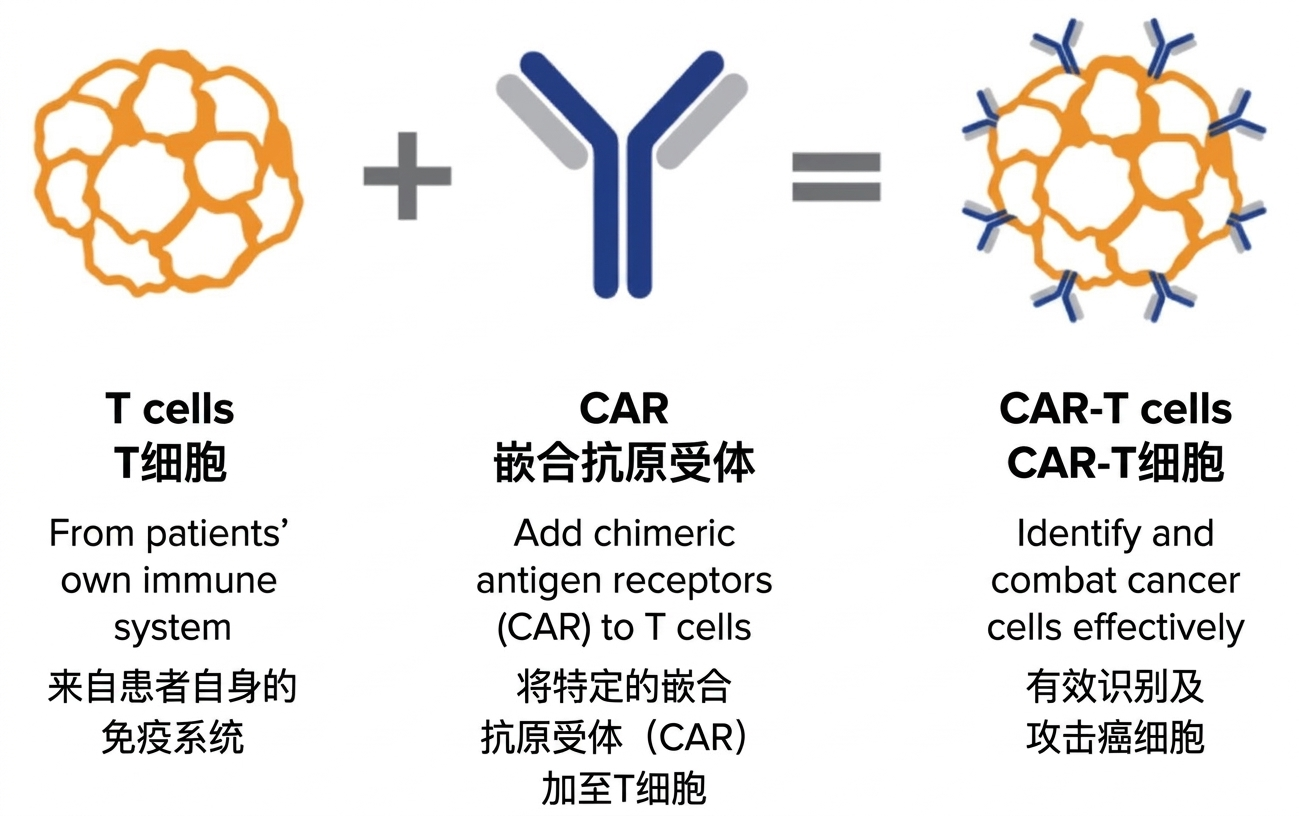
    CAR-T cell therapy is a type of cancer treatment that uses the patient’s own immune cells to fight cancer. Through genetic modification, a chimeric antigen receptor (CAR) targeting a specific antigen on cancer cells is introduced to the patient’s own T-lymphocytes (T cells) to create CART cells. The genetically modified CAR-T cells are re-infused back to the patient’s body and help identify and combat cancer cells effectively.

    · 图片1.png
    How are CAR-T cells manufactured?

    1. Apheresis: Isolation and collection of T cells from the patient's peripheral blood

    2. Genetic modification to create CAR-T cells

    3. CAR-T cells expansion

    4. Infusion of CAR-T cells back into the patient CAR-T
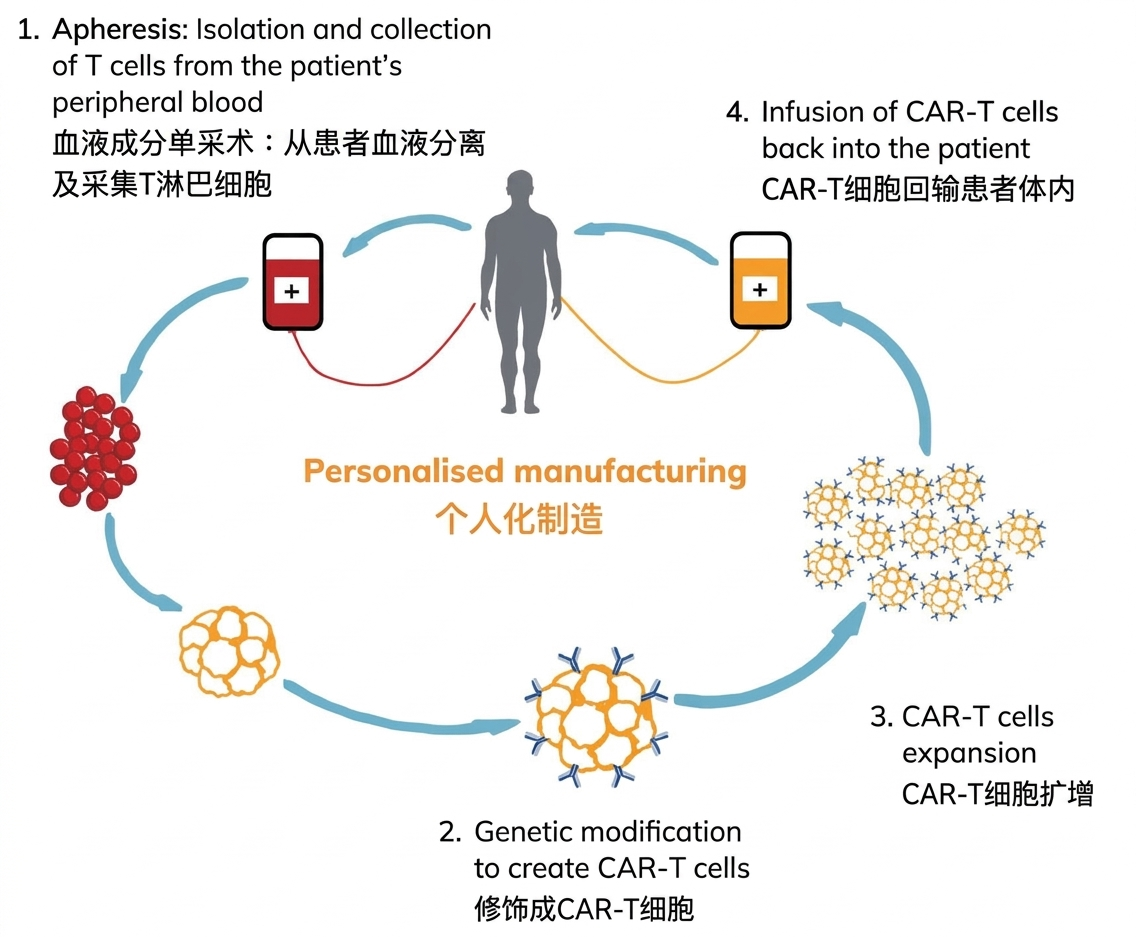
    图片2.png


    Differences between CAR-T cell therapy and conventional cancer treatments 

    • Conventional cancer treatments often require multiple treatments over an extended period, imposing a significant physical, emotional and financial burden on patients

    • CAR-T cell therapy uses genetically modified immune cells to recognise and target cancer cells more precisely

    • CAR-T cell therapy generally involves a single infusion with a relatively shorter treatment course. However, patients still require assessment before treatment and close monitoring afterwards. A hospital stay of 14-28 days is needed for the whole treatment*

    *The treatment schedule, duration of hospitalisation and post-treatment monitoring arrangements may vary according to the CAR-T product, the patient’s clinical condition and the treating team’s assessment. The individual schedule will be explained before treatment.


    Who may be suitable for CAR-T cell therapy?

    • With adequate cardiac, pulmonary, and hepatic function

    • Overall health condition is suitable for treatment


    Who may not be suitable for CAR-T cell therapy?

    • Women who are pregnant or breastfeeding, or individuals planning to become pregnant within the next six months

    • With active infections, such as active hepatitis B infection

    • With abnormal vital signs or who are unable to undergo the required examinations

    • With psychiatric or psychological disorders precluding treatment and efficacy assessment

    • With a history of hypersensitivity to any active ingredient of the CAR-T cell product

    • With significant impairment of major organs such as the heart, lungs or brain

    Treatment process

    Pre-treatment assessment 

    The doctor will assess the patient's overall health and medical condition to determine whether CAR-T cell therapy is suitable and arrange the necessary tests and investigations.


    Collection of T-lymphocytes from blood 

    Collect T-lymphocytes (immune cells) from the patient’s peripheral blood through apheresis as the starting material for CAR-T cell manufacturing. The collected T-lymphocytes are then sent to a laboratory, where they are genetically modified to  produce CAR-T cells.


    Bridging therapy and lymphodepletion (while CAR-T cells are being manufactured)

    Depending on the patient's condition, the doctor may recommend bridging therapy (such as chemotherapy, targeted therapy, immunotherapy or radiotherapy) to help control the disease and relieve symptoms. More than seven days after the completion of bridging therapy, lymphodepletion is administered to reduce the number of lymphocytes in the body and minimise the risk of the infused CAR-T cells being eliminated by the immune system.


    CAR-T cell infusion 

    The patient will receive the CAR-T cell infusion one to two days after lymphodepleting chemotherapy, which is generally administered within seven days.


    Post-treatment monitoring and long-term follow-up 

    The timing of bridging therapy, lymphodepleting chemotherapy and CAR-T cell infusion will be determined according to the treatment protocol, product requirements and the patient's clinical condition. After discharge, patients will continue to attend regular follow-up appointments and undergo assessments to evaluate treatment outcomes and monitor their recovery progress.


    Potential advantages

    CAR-T cell therapy is generally administered as a one-time infusion. Following treatment, the CAR-T cells may continue to work in the body and, in some patients, can lead to durable remission, potentially reducing the need for repeated treatment cycles. Compared with prolonged courses of chemotherapy, CAR-T cell therapy may help avoid some of the cumulative toxicities associated with ongoing treatment, which may contribute to maintaining quality of life.

    Patients require individual assessment, preparative treatment, close monitoring and long-term follow-up before and after CAR-T cell therapy. Treatment response, duration of benefit and potential side effects vary among patients and depend on factors such as the CAR-T product used and the disease being treated.

    CAR-T cell therapy offers a highly targeted and innovative treatment approach for certain cancers. By modifying a patient’s T cells to recognise specific target antigens on cancer cells, CAR-T therapy provides an additional therapeutic option for eligible patients, including some whose disease has not responded adequately to previous treatments.


    Personalised treatment approach

    CAR-T is made from the patient’s own cells (autologous therapy). Doctors collect some of the patient’s immune cells, modify them in the laboratory so they can recognise the cancer, grow them in large numbers, and give them back. Because the cells come from the patient, the body is less likely to reject them.


    Monitoring requirements

    After the infusion, patients need to stay near the hospital for about a month. Monitoring includes vital signs, neurological assessment, blood counts, infection surveillance, and management of cytopenias or other reactions.  Most reactions happen within the first two weeks and can be managed. Even after going home, regular follow-up is needed to check for infections and blood count problems.


    Possible side effects and risks

    The main acute risks are:

    • Cytokine Release Syndrome (CRS), e.g. fever, hypotension, hypoxia

    • Immune Effector Cell-Associated Neurotoxicity Syndrome (ICANS), e.g. confusion, speech disturbance, seizures

    Late complications (occurring >90 days after infusion) include:

    • Cytopenias

    • Infections

    • Secondary malignancies

    • Delayed neurotoxicity

    Persistent B-cell aplasia can lead to hypogammaglobulinaemia requiring immunoglobulin replacement.

    Infections remain a leading cause of non-relapse mortality in long-term survivors.


  • Virtual Assessment Centre (VAC)

    What is Virtual Assessment Centre (VAC)?

    The Virtual Assessment Centre (VAC) is IHH Healthcare North Asia’s virtual assessment hub and front-end gateway for advanced cellular therapy. It integrates the clinical capabilities of Hong Kong and Shanghai and enables seamless internal referral and patient flow. The VAC is an integrated assessment platform supported by intelligent tools designed to match the right patient to the right destination. 


    Purpose of the VAC

    The purpose of the VAC is to combine, convey, and convert: integrate Hong Kong and Shanghai capabilities, and convert patient enquiries into coordinated care. Specifically, it supports:

    • Joint assessment: Hong Kong and Shanghai experts review the patient’s history, physical status, genetic risks, and prior treatments together.

    • Dual-city recommendation: an objective comparison of Hong Kong versus Shanghai, considering cost, language preference, and geography.

    • Full tracking: the coordinating physician follows every step, with real-time data sharing between both teams.

    • International transition: liaison with local providers if follow-up is needed in another country.


    Who it is designed for 

    Patients considering advanced cellular therapies

    Patients who are considering advanced cellular therapies and who need specialist assessment to determine suitability, optimal timing, and the most appropriate treatment setting.

    Local and overseas patients

    The VAC serves patients from Hong Kong, Chinese Mainland, and overseas. It supports cross-border, high-value, cost-effective medical services and international patients, with multilingual support and coordination across jurisdictions.

    Patients seeking a second opinion

    Patients who have already received a diagnosis or treatment recommendation elsewhere and wish to obtain an independent specialist opinion before making a decision.


    Benefits of early specialist assessment

    Early specialist assessment enables timely determination of suitability and optimal treatment timing, which is particularly important in advanced haematological malignancies and solid tumours where disease status can change rapidly.

    It provides an objective comparison of Hong Kong versus Shanghai based on clinical factors, cost, language preference, and geography. It also allows both teams to share data in real time, supports continuity of care across jurisdictions, and avoids delays caused by incomplete workup or fragmented referrals.


    Assessment process

    The VAC follows a six-step assessment journey:

    1. Patient Intake 

    The concierge receives the patient, collects medical records, and coordinates referrals.

    2. Assessment

    Assessment doctors review history and assess the case against applicable standards.

    3. Referral 

    The patient is referred to the right hospital in Hong Kong or Shanghai.

    4. MDT Review 

    The MDT Specialist Panel discusses complex cases and coordinates across hospitals.

    5. Follow-up

    Treatment ends and follow-up begins.

    6. Handover

    Handover to overseas experts if further follow-up is needed abroad.


    Possible outcomes

    Suitable for advanced cellular therapies

    The patient may be told that a particular treatment is suitable, and where it can be done.

    Further tests required

    If the available records are insufficient, the VAC may recommend further investigations—such as molecular profiling, organ function tests, or imaging, before a final treatment recommendation can be made.

    Alternative treatment recommendations

    If the patient is not suitable for the requested cellular therapy, the VAC may recommend alternative options, such as standard systemic therapy, clinical trial enrolment elsewhere, or best supportive care, and may refer the patient accordingly.


    Patient journey

    Consultation duration

    It depends on the completeness of records and case complexity. Usually, cases will be assessed within 24 hours after submitting medical recor.

    Family participation

    It is recommended to encourage family involvement, particularly for cross-border care, cost discussions, and informed consent. The VAC Concierge coordinates family participation as needed.

    Follow-up arrangements

    Follow-up begins after treatment. The coordinating physician follows every step, with real-time data synchronisation between Hong Kong and Shanghai. If the patient later needs follow-up in another country, the coordinating physician liaises with local providers to ensure continuity of care.

  • Contact Us 

    Hematology-Oncology Department At PSH

    Location: No.1172 Jile Road, Minhang District, Shanghai

    Enquiries/Appointment:

    • Hotline:4008196622

    • Tel:021-33591588

    • Email: ruiren.zhai@parkwaypantai.com


    Virtual Assessment Centre 

    Enquiries / Appointment:  

    • Phone: +852 59578123

    • WeChat:IHH_NorthAsiaClinic

    企业微信截图_1794289543794.png